
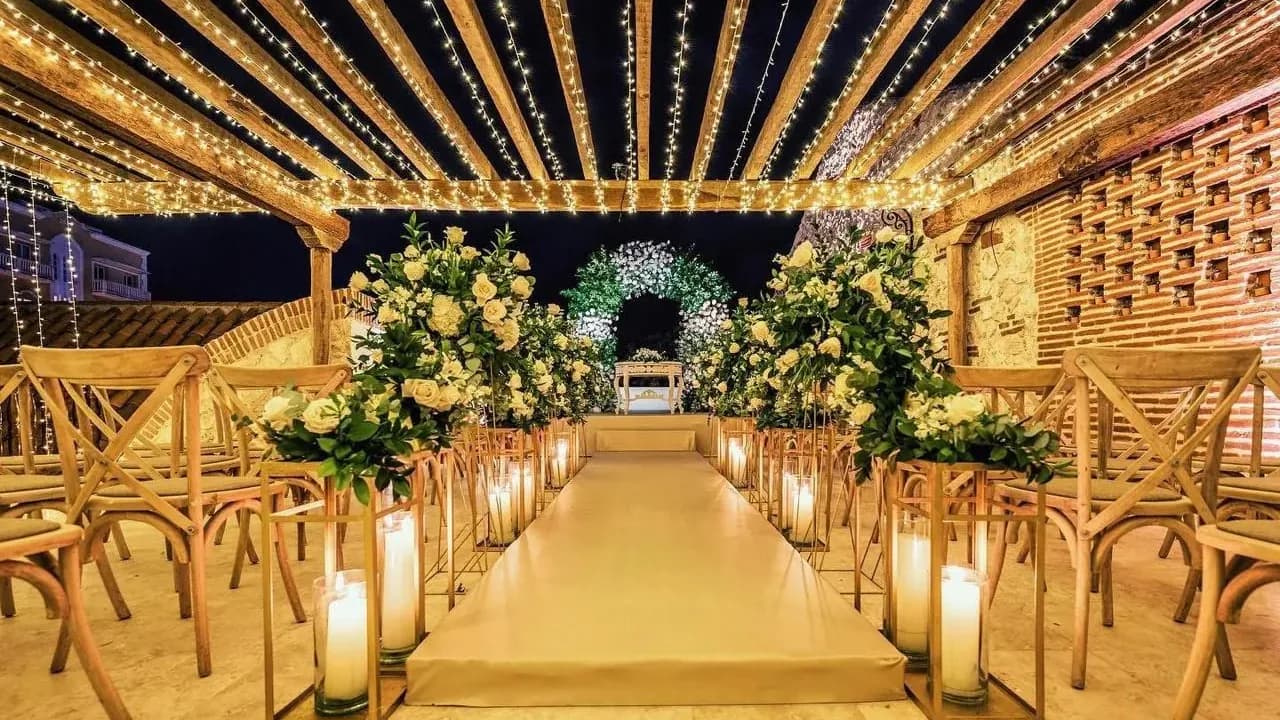
Wedding Styles: A Guide to Finding Yours
To find your wedding style, the exercise is simpler than it looks: look at how you dress, the places you enjoy, the architecture of the venue and the colours of your home. Then choose three words to describe the wedding, and use them as a filter for every decision. The ten styles below are the vocabulary for naming what you already like.
When a couple arrives with a folder of inspiration images, my first job is not to pick a trend — it is to listen. Styles come out of architecture, fashion, art and nature, but above all they have to connect to who you are. They are not closed boxes: they can be mixed and reinterpreted, as long as the visual language stays coherent.
Luxury
Luxury works with scale, high-quality materials and impeccable production. Large floral installations, orchids, candelabra, glassware, bespoke furniture, architectural lighting and personalised details build a top-tier experience. Luxury is not only abundance — it is proportion, service, visual restraint and excellence in every finish.
Victorian Garden
One of my favourites, because it brings together romance, botanical abundance and refined detail. Flowers and foliage appear in asymmetric compositions across ceilings, walls and walkways, alongside candelabra, crystal and metals. Its European inspiration can read as classic, but contemporary palettes and looser arrangements bring it up to date.
Natural rustic
Wood, natural fibres, stone, textiles and the landscape itself lead. It works especially well in haciendas, barns, country houses and mountain weddings. To keep it from looking improvised, the materials have to be chosen carefully and paired with warm lighting, organic floristry and furniture in genuinely good condition.
Vintage and rustic chic
This style uses furniture with a history: dusty tones, restored objects, suitcases, typewriters, porcelain and details borrowed from earlier decades. Rustic chic takes that nostalgia and mixes it with natural materials. Pick one era or one concrete narrative — otherwise the décor turns into a pile of old things.
Boho chic
Boho chic communicates freedom, travel and a connection to nature. It uses textiles, rugs, fibres, wood, prints and unstructured flowers. Pampas grass and artisanal elements can play a part, though these days they are better used with restraint and a more edited eye. Comfort and elegant informality are the heart of it.
Industrial
Born out of spaces with brick, concrete, metal, exposed pipework, tall windows and high ceilings. Lighting is decisive here: festoon strings, pendants, neon, candles and indirect light all soften the architecture. Flowers provide contrast, while clean-lined furniture keeps the urban character intact.
Classic
White, crystal, roses, symmetrical arrangements and formal lines build a style that never really goes out. Religious ceremonies, elegant halls and structured gowns find a natural frame here. To bring it up to date: cut the excess, work the light harder, and choose one hero flower of genuinely high quality.
Secret garden
Enveloping and a little mysterious. Large leaves, trees, foliage, carefully chosen flowers, candelabra, wood and low light turn the space into a hidden garden. Clear-span tents and venues surrounded by forest suit it especially well. It needs real production budget for the immersion to feel complete rather than suggested.
Romantic
Soft tones, roses, hydrangeas, peonies, delicate fabrics, lace, candles and warm light build an emotional atmosphere. Some couples read it as traditional, but romance can be contemporary if you work with more organic shapes, less predictable palettes and personal details. The goal is not a cliché — it is a sensitive atmosphere.
Conceptual or themed
A themed wedding starts from one concrete reference: an era, a city, a film, music, art or a shared passion. It demands coherence across stationery, set design, wardrobe, entertainment and food. It usually costs more, because many elements have to be designed and built specifically. The reference has to be reinterpreted — copying symbols literally is what makes a themed wedding lose its elegance.
How to choose yours
To help couples find their style, I usually suggest a simple exercise: look at how you dress, the places you enjoy, the architecture of the venue, the colours of your home and the way you host your friends. Then settle on three words to describe the wedding — natural, elegant and warm, for example — and use them as the filter for every decision that follows.