
Wedding Food in Colombia: How to Build a Menu Guests Remember
A wedding menu people remember is built on local, seasonal produce, dishes personalised around your own story, and dietary restrictions resolved at RSVP rather than on the day. Décor surprises people when they walk in and music moves them, but food accompanies most of the celebration — and it is what stays with them longest.
After as many weddings as I have worked, I am certain food is never a secondary service. My advice is not to choose a menu simply to feed your guests — use it to tell your story through aroma, texture, flavour and shared moments.
Colombia gives you an extraordinary advantage here: a diverse pantry, regions with sharply defined culinary identities, and chefs who can join tradition to contemporary technique. The Caribbean, the Andes, the Pacific, the eastern plains and the Amazon can each inspire something sophisticated without losing authenticity — and for guests flying in, this is often the part of the country they did not expect.
Fusion that actually works
Fusion works when there is balance. It is not mixing for the sake of mixing — it is taking a Colombian ingredient and giving it a presentation or technique that makes it new. Ceviche with tropical fruit, a bite of chicharrón cut with acidity and fresh herbs, a stuffed arepa served as a chef-driven canapé, or Caribbean fish with Mediterranean influence. The rule is to respect the original flavour and let the chef elevate it, not bury it.
Menus that tell your story
A personalised menu can speak about where you met, where your families come from, a recipe that followed you through your relationship, or the flavours of the destination itself. When a couple is multicultural — and most destination-wedding couples are — food becomes the bridge between two guest lists. You can design a progression that opens with Colombian canapés, moves to a dish drawn from the other culture, and closes with a dessert that brings both together.
Live stations and interactive service
Live stations keep growing because they turn service into spectacle. Grills, ovens, sushi bars, ceviche counters, pasta stations, fairground carts or gourmet street food let guests choose, talk to the cook and watch their plate being made. That interaction makes food feel fresher, closer and more fun — and it gives people who do not know each other something to stand around and talk about.
Local produce, season and sustainability
Working with local, seasonal ingredients improves the dish, strengthens regional producers and cuts unnecessary transport. A sustainable proposal also means well-calculated portions, responsible waste handling, reusable tableware, less single-use plastic and logistics designed to avoid waste. Sustainability is not a limitation — it is a smarter way to design the event.
Dessert tables with identity
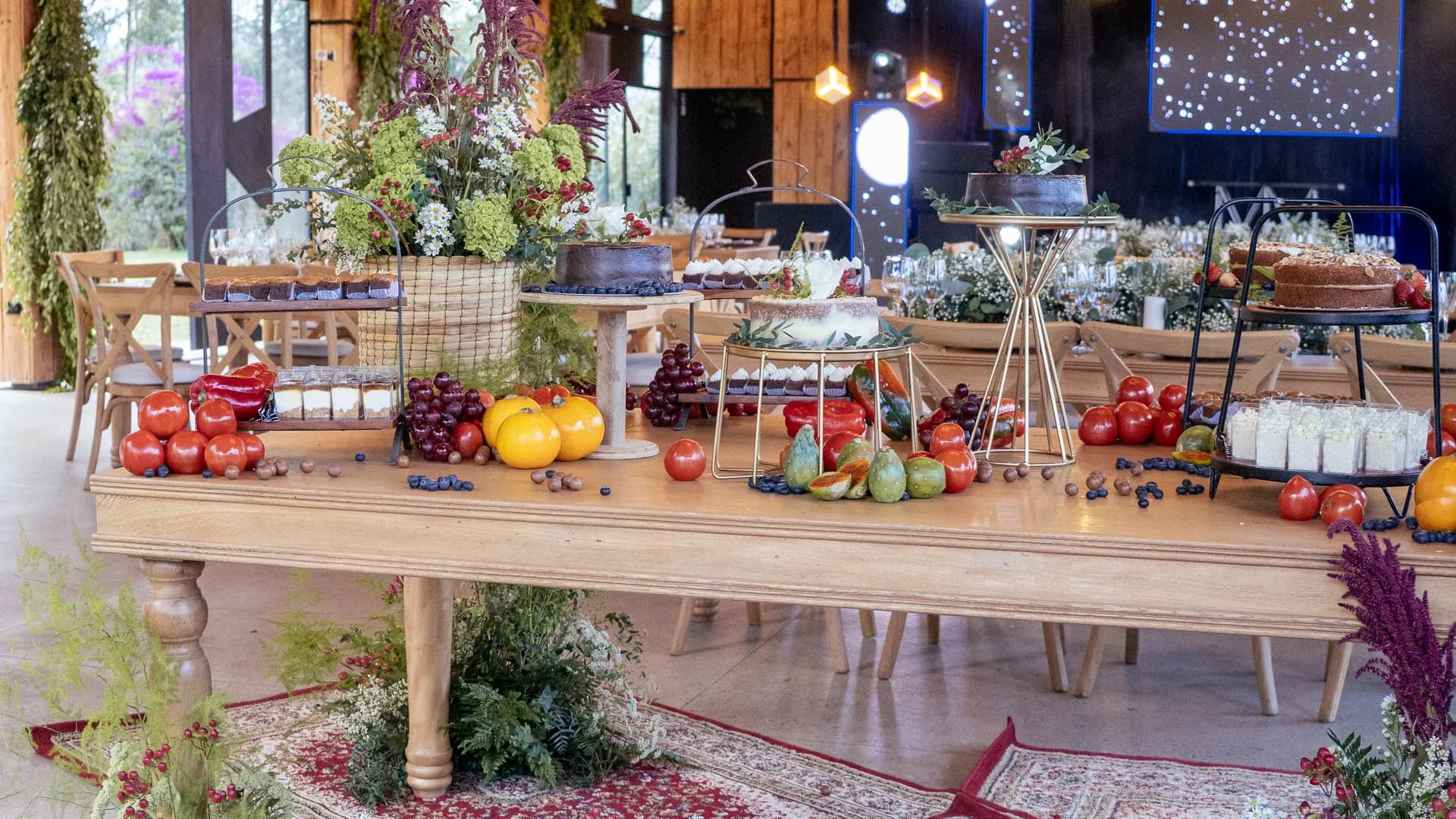
The traditional cake still has its place, but it now shares the room with dessert tables, mini tarts, chocolates, artisanal ice cream, local fruit and small bites that let people taste several things. A good dessert setup integrates with the décor, stays impeccably presented and offers options for different tastes. At a lot of weddings it becomes the most photographed corner of the reception.
Creative cocktails — and drinks without alcohol
The bar is no longer just a place where bottles get poured. Signature cocktails, tropical fruit infusions, fresh herbs, Colombian coffee and artisanal drinks can all be part of the concept of the wedding.
It matters just as much to offer mocktails and non-alcoholic drinks with the same care and presentation. Guests who are pregnant, driving, in recovery or simply not drinking should get an experience, not a leftover.
Colombian tradition, served with elegance
Lechona, sancocho, bandeja paisa, chicharrón, arepas, empanadas and the dishes of the eastern plains can all be reinterpreted without losing what they are. A traditional dish, well presented, does not stop being authentic — it proves that this kitchen can hold its own at a high-end celebration, with pride rather than apology. For international guests, this is usually the food they talk about when they get home.
Late-night food for the end of the party
After hours of dancing, a comfort-food station can be the best ending of the night. Sliders, tacos, hot dogs, pizza, arepas or broth in individual portions all work well if the quality holds and the presentation still matches the event. Put this moment in the timeline deliberately, so it lands when guests actually need it rather than when someone remembers it.
Dietary restrictions are hospitality, not admin
Vegetarians, vegans, coeliac guests, allergies and religious restrictions belong in the plan from the RSVP onward. Improvising a different plate on the day is not enough. The kitchen and the planner both need to know, cross-contamination has to be handled where it matters, and the alternative should feel as considered as the main menu — not like a consolation prize.
Service is part of the flavour
Temperature, timing, the attitude of the staff, coordination between kitchen and floor, clean tableware and how each plate is presented all shape how the food is perceived. A delicious menu loses its impact if it arrives late or cold. That is why a tasting has to evaluate more than flavour: plating, portion size, and whether the caterer can genuinely deliver at your headcount.